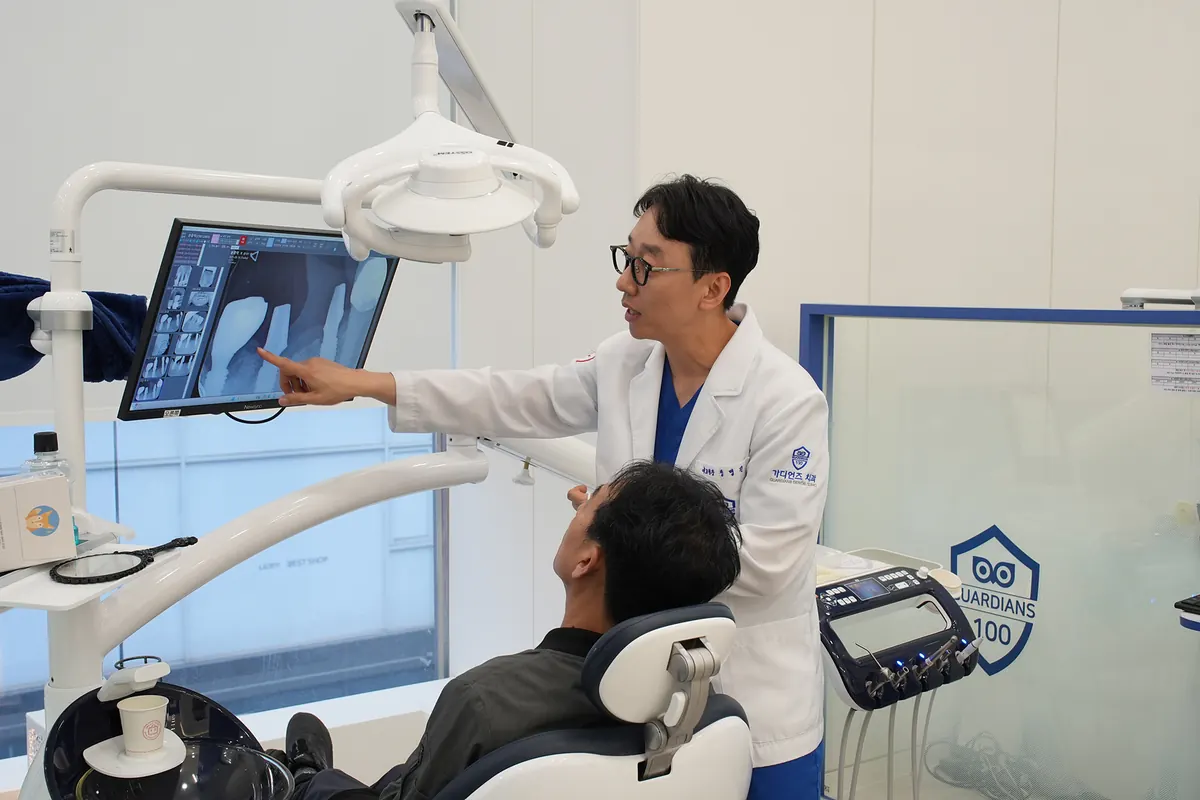
 Medically reviewed byDr. Myungjin Chung · Representative dentist, integrated dentistry specialist
Last reviewed 5 November 2026
At a glance
- Insurance
- Covered
- Imaging
- Panoramic X-ray, CT if needed
- Stitches
- Usually removed after about a week
- Recovery
- Swelling peaks around day 2–3
Is it right for me?
- Repeated swelling or pain behind your last molar
- Food packing that causes decay in the tooth in front
- A tooth stuck sideways against the neighbouring tooth
- A cyst or bone loss seen on X-ray
How it works
- X-ray
A panoramic X-ray, and sometimes a CT scan, shows how close the roots are to the nerve.
- Explanation
We explain the risks and the plan in plain words before you agree.
- Extraction
The tooth is removed under local anaesthetic. You bite on gauze for about an hour.
- Check
We check healing and remove stitches, usually after about a week.
Insurance and cost
Wisdom tooth extraction, the X-rays and the follow-up are covered by Korean health insurance; you pay the standard co-pay. Without insurance we tell you the full fee before starting.
Planning around your stay in Korea
Book the extraction the day before your day off. Lower wisdom teeth usually cause more swelling than upper ones, so plan a quieter few days. Avoid scheduling it right before a long flight.
Aftercare
- No smoking, alcohol, straws or spitting for a few days
- Eat soft, lukewarm food such as rice porridge, soft tofu or yogurt
- Use a cold pack on the cheek on the first day
- Call us if bleeding, swelling or fever gets worse instead of better
Questions
Is wisdom tooth removal covered by insurance in Korea?
Yes. Extraction is covered by Korean health insurance, and you pay the co-pay.
Can all four be removed at once?
Sometimes. We usually remove one side at a time so you can still chew on the other side.
Do I need a CT scan?
Only when the X-ray shows the roots close to the nerve or the position is complex.
When can I go back to work?
Many people return the next day for desk work. For physical work, allow a day or two more after a lower wisdom tooth.
General information, not a diagnosis. Your dentist will advise you after an examination.